


Neo Psychiko
History of Neo Psychiko
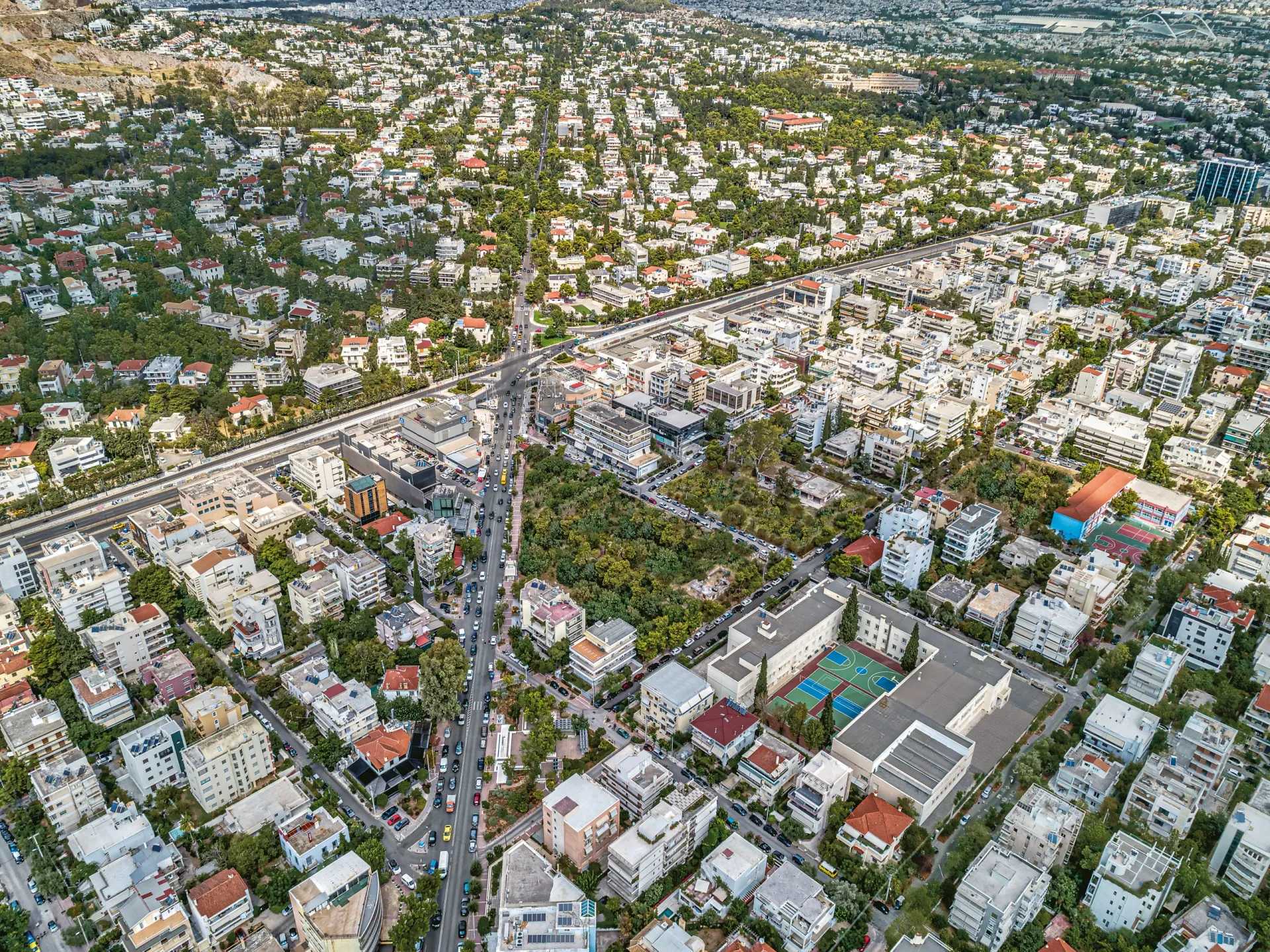
In antiquity, Neo Psychiko was part of the deme of Phlya of the Kekropis tribe, which lay in the inland zone (Mesogeia) under the administrative division of Cleisthenes. The modern history of the suburb goes back to the beginning of the 20th century. Neo Psychiko first appears in the 1929 census.
Anthokipos, “Pefka” and “Pediada”
Before the 1920s and the great wave of refugees caused by the Asia Minor Catastrophe, there were very few buildings and residents in the area. Records mention the estates of Vourlakos, Konstantaras, Stefos and Mitropoulos and the houses of Vasileios Kirykos, Christos Kirykos, Sokratis Klonis and Charokopos.
The area of Agia Sofia towards Kifisias Avenue was called Anthokipos (“flower garden”) because flowers were grown there; the rest of Neo Psychiko was called “Paliotrivia” or “Pefka” (“the pines”); the site of today’s Pentagon was a makeshift airfield; and from there to Chalandri the area known today as “Pediada” (“the plain”) was planted with vineyards.
The first refugee families came mainly from Vourla and Meli in Asia Minor. After living temporarily in Chalandri, and after great efforts to find housing, which included an attempt to expropriate land in Filothei, they secured the expropriation of the original area of the settlement, in today’s Agios Georgios area.
Building began in 1929. The leading figures in this effort were the Refugee Housing Association, with its presidents Dim. Kapantais and Nikolaos Mantalos, the then responsible Minister Emm. Emmanouilidis and the president of the Community of Chalandri, Sp. Theodosiou.
In February 1931 the families moved permanently into the roughly fifty houses that had been built. The first families to settle there included the Angeloglou, Aronis, Voulgaridis, Kapantais, Mantalos, Nikolintagas, Ntoumanis, Tsirigotis and Chatzis families.
However, living conditions remained hard, and the residents overcame the difficulties only with great effort.
The most characteristic examples are:
- the water supply of the settlement, to which the Ministry of Welfare, the Community of Chalandri and the Kekrops company contributed, and
- the opening of the streets, with the decisive contribution of the then Prefect Nik. Paritsis and the residents’ own labour in turning a rocky, impassable hill into the asphalt road that bears his name, which was the main route to Kifisias Avenue.
In addition, as part of the work of the refugee association mentioned above, which continued until the Community was established, other needs of the settlement were also met, such as street lighting and tree planting.
Above all, however, the first efforts were made to build a school, so that the children could escape the unbearable conditions of the so-called “Shack” on Agios Georgios Square. This was achieved with the building of today’s 1st Primary School in 1960–61.
The Church of Agios Georgios
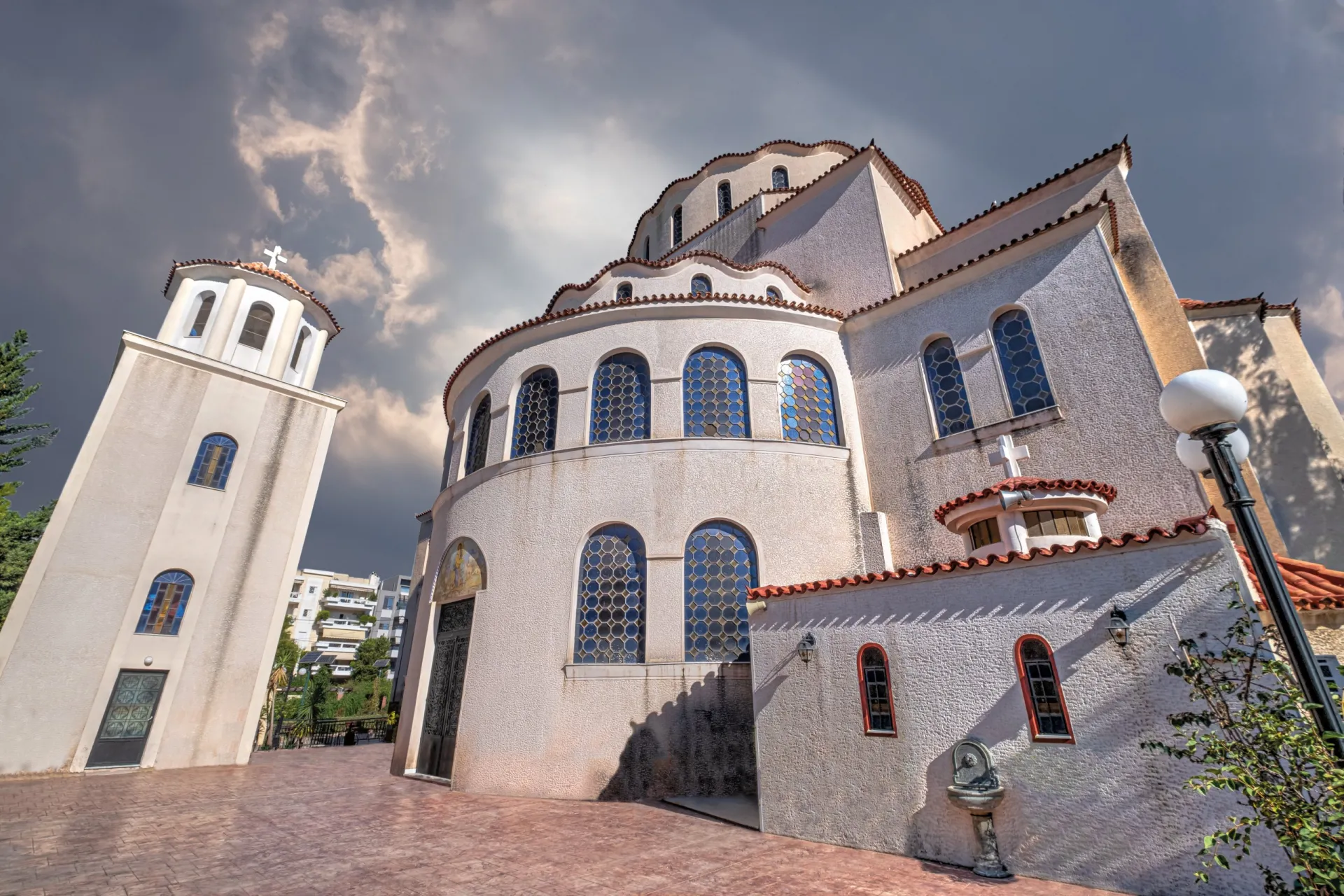
The Association also led the first efforts to build a church, which was finally built with a wooden tiled roof in 1934 and named after Agios Georgios (Saint George). The first priest was the hieromonk Prokopios Kardoulis, and the first parish council consisted of Chatzis, Dim. Tsaldaris and D. Nikolintagas. After an extension in 1947, the church was completely rebuilt in 1956 and officially inaugurated on 31-3-1957 by Alexios, later Metropolitan of Zakynthos. It kept roughly the same form until it was demolished and the large new church of today was built, which opened on 3-11-1990.
The sanctuary of the first church survives and is now protected by the chapel of Panagia Myrtidiotissa built over it, whose opening ceremony took place on 13-10-2013 in the presence of His Eminence Serafeim, Metropolitan of Kythira and Antikythira.
The Agia Sofia area
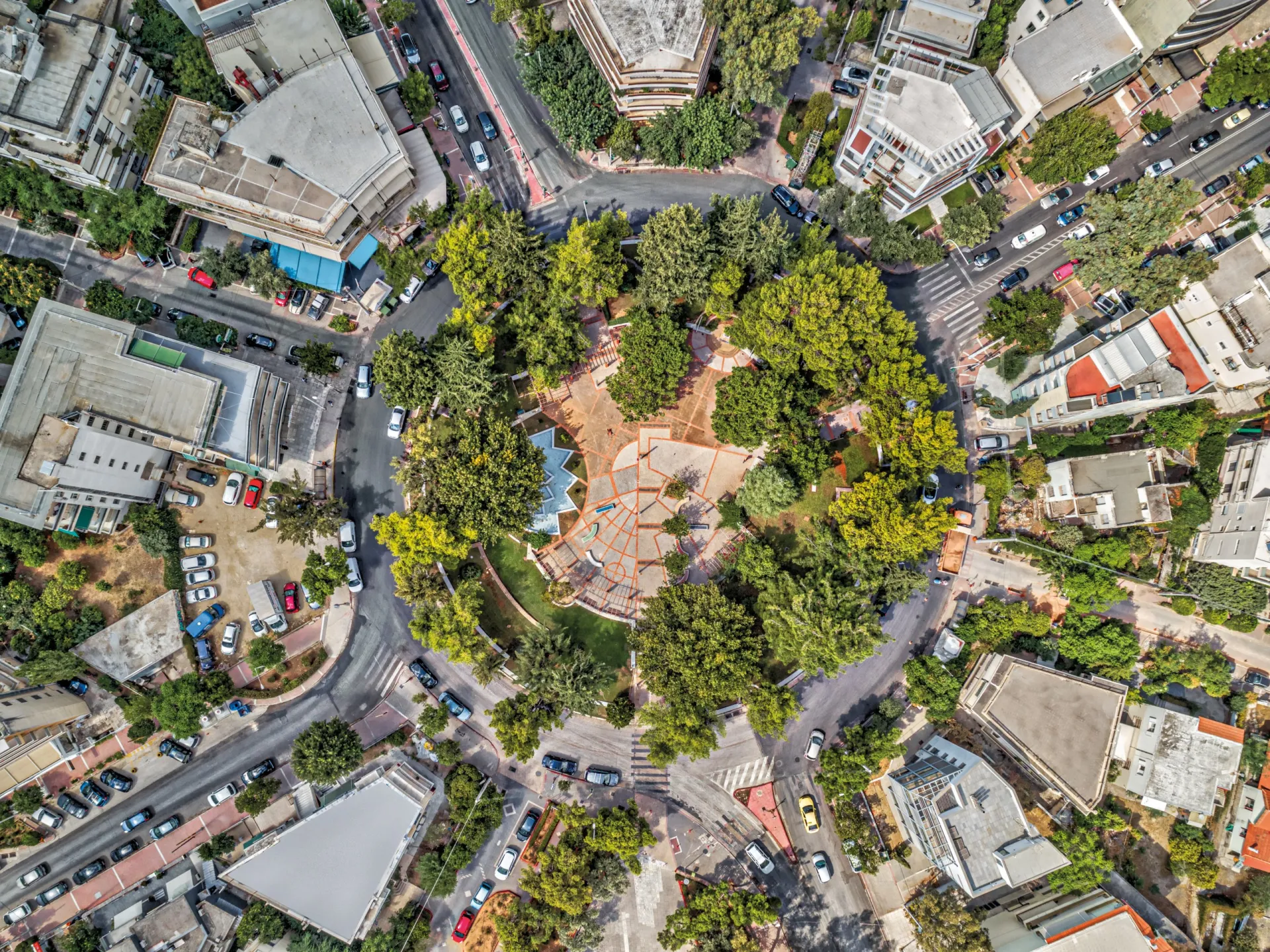
A leading role was played by the Cooperative of Greek Officers and Civil Servants, founded by decision of the Minister of National Economy dated 13-9-1929. On this Cooperative’s initiative, the land was bought and the town plan was drawn up for the area enclosed by Adrianou, Perikleous, Makrygianni, Dimokratias, Evrota and Platonos Streets.
Here too, the priority of the Cooperative and the first residents was to meet the basic needs for the running of the settlement, such as:
- opening streets, the first being Perikleous Street, followed by V. Vasileiou, Adrianou Streets, etc.,
- laying water pipes, installing street lighting, connecting telephones,
- tree planting, improving transport links with Athens, and
- building a sewerage network that was innovative for its time.
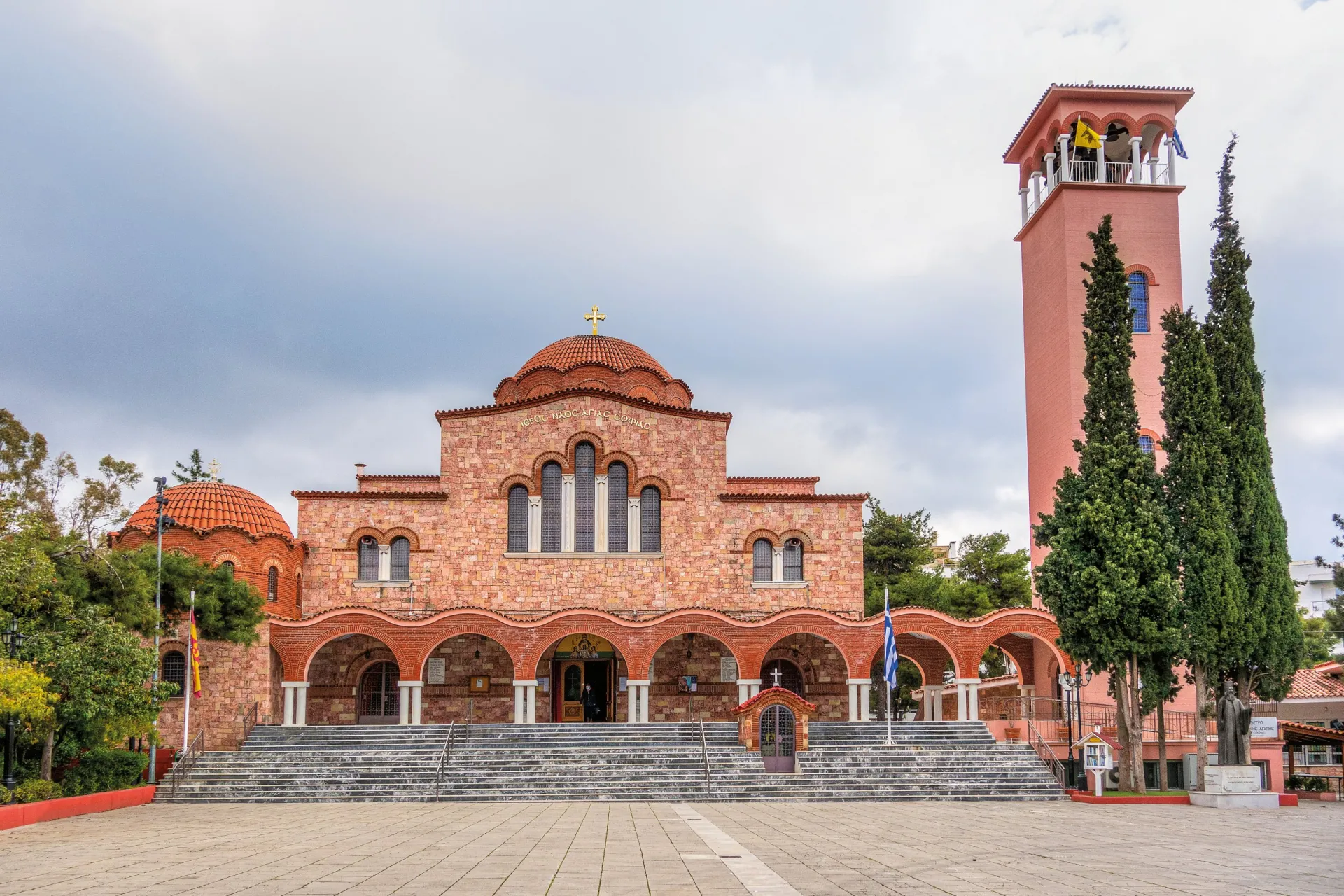
The building of a church, named Agia Sofia in memory of Queen Sophia, was decided in 1935 and completed in 1938 to plans by the architect If. Kokkidis, with the hieromonk Parthenios Peridis as its first parish priest. In October 1961 the foundation stone was laid for the larger new church that still stands today, built to plans by the architect Solon Kydoniatis with donations from, among others, Aristotle Onassis.
The key figures in all this work of the Cooperative, and of the Beautification Association founded later, included: Dimitrios Vasileiou (General Director of Public Works), Ch. Kirykos, V. Kourousopoulos, K. Liosis, I. Michalopoulos, K. Bakopoulos, Th. Boukogiannis, I. Naskos, K. Nikolakopoulos, G. Papaspyrou, K. Sourlos, S. Triantakis and G. Psyllas. Special mention should be made here of Sonia Nikolakopoulou, who created the Psychiko Ladies’ Association, today the “Agios Nektarios” Foundation, for the protection of girls in need.
Cultural and Beautification Society
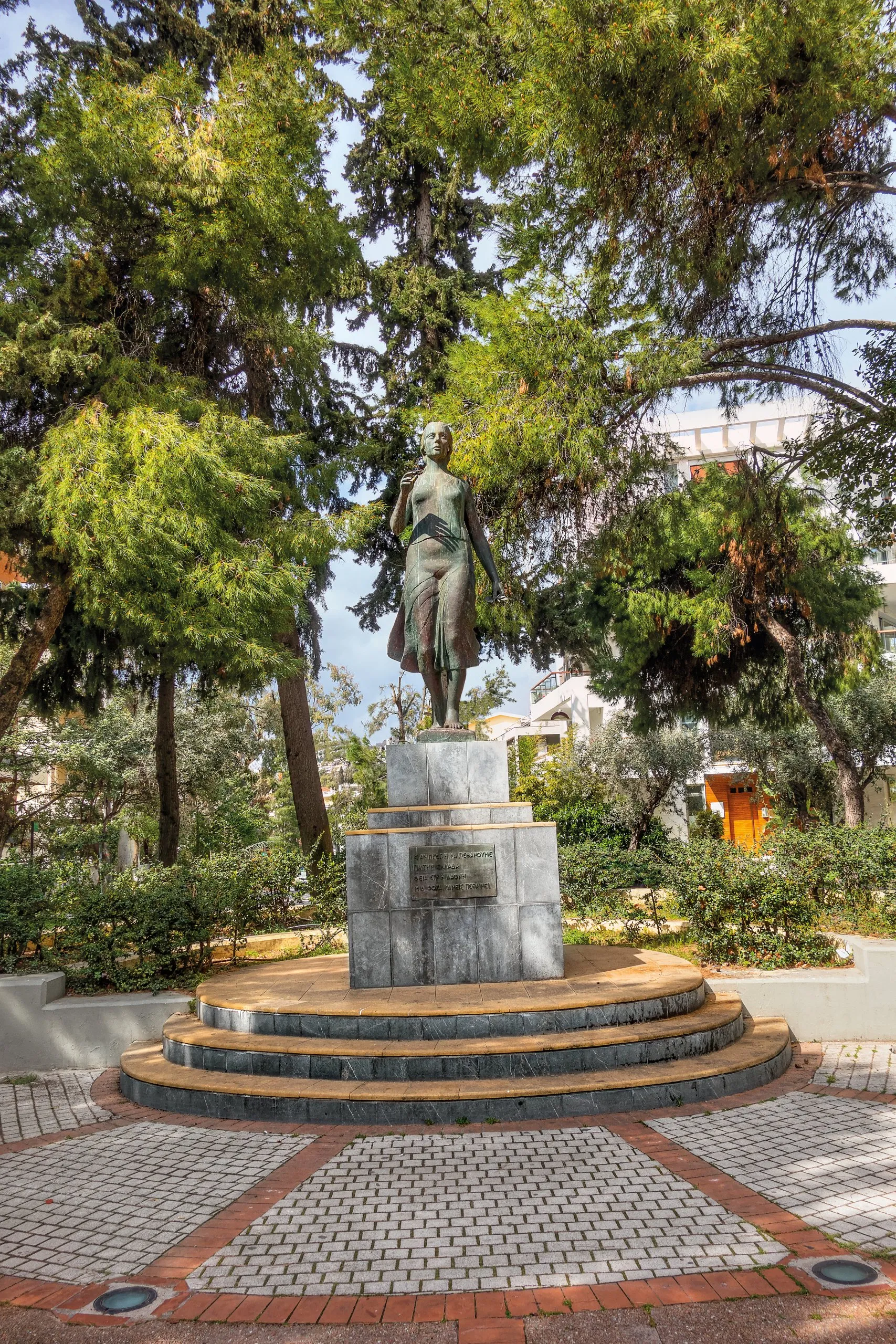
A major event was the founding in 1955 of the Cultural and Beautification Society of Neo Psychiko (MEO), whose activities and work played such a decisive part in shaping the suburb that, until the end of the 1970s, the history of the Society largely coincides with the history of the Community of Neo Psychiko. Examples of the work done under the difficult conditions of the time include:
- opening streets and laying out Agios Georgios, Agia Lavra and Eleftherias Squares,
- water supply and street lighting,
- improving the transport of the time, when the bus terminated at Eleftherias Square, creating new bus stops, such as the Venizelou stop on Kifisias Avenue, and building shelters at them,
- the necessary steps to expropriate plots to build first a Primary School and later a Secondary School, and paying a large part of the cost of building them,
- building the Church of Agios Georgios,
- organising a street market and, finally,
- supporting various activities in Neo Psychiko, such as the POPs sports club (Psychiko Football Club), publishing a newsletter, organising the May “Anthesteria” flower festival, and organising excursions and dances.
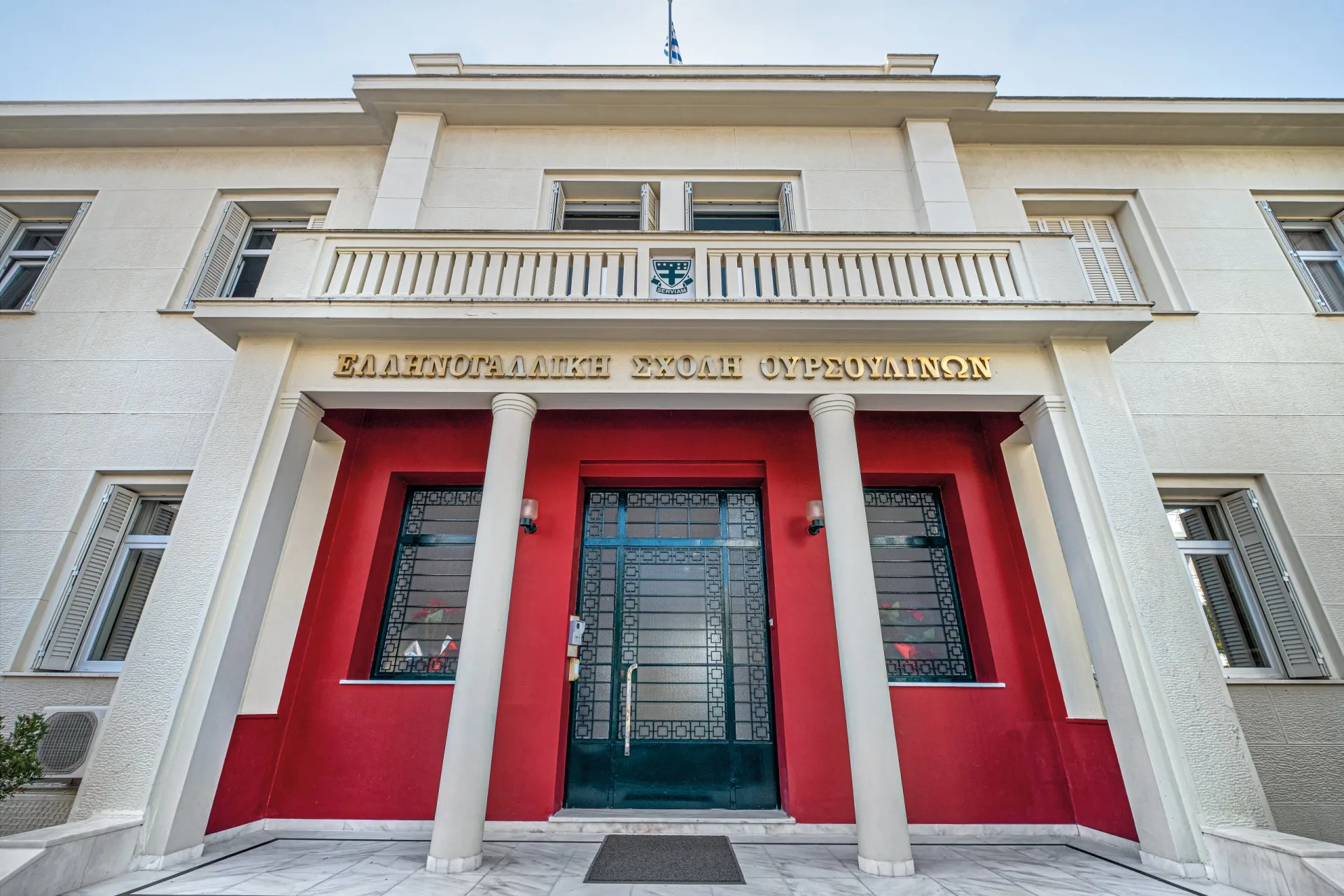
The following extracts from the minutes of the Board meetings show the concern of the time and the effort made to achieve all these goals:
Extract from the meeting of 26-3-1958: “For three months now the beautification works sector has been active with untiring energy. Action in this sector must be developed. We must draw everyone into beautification, which forms the second part of the title of the M.E.O. and is therefore one of its principal aims. Furthermore, the preservation and growth of the saplings planted must be secured by the swift installation of a water supply to the Square…”
On the expropriation of the school plot, the minutes of 29-10-1958 record:
“Mr Deligiannis describes as historic for the future of our suburb this moment, at which a matter is resolved for which distinguished members of the Community and the Society have laboured, and the Society feels particular satisfaction at having contributed to the realisation of this most important work…”
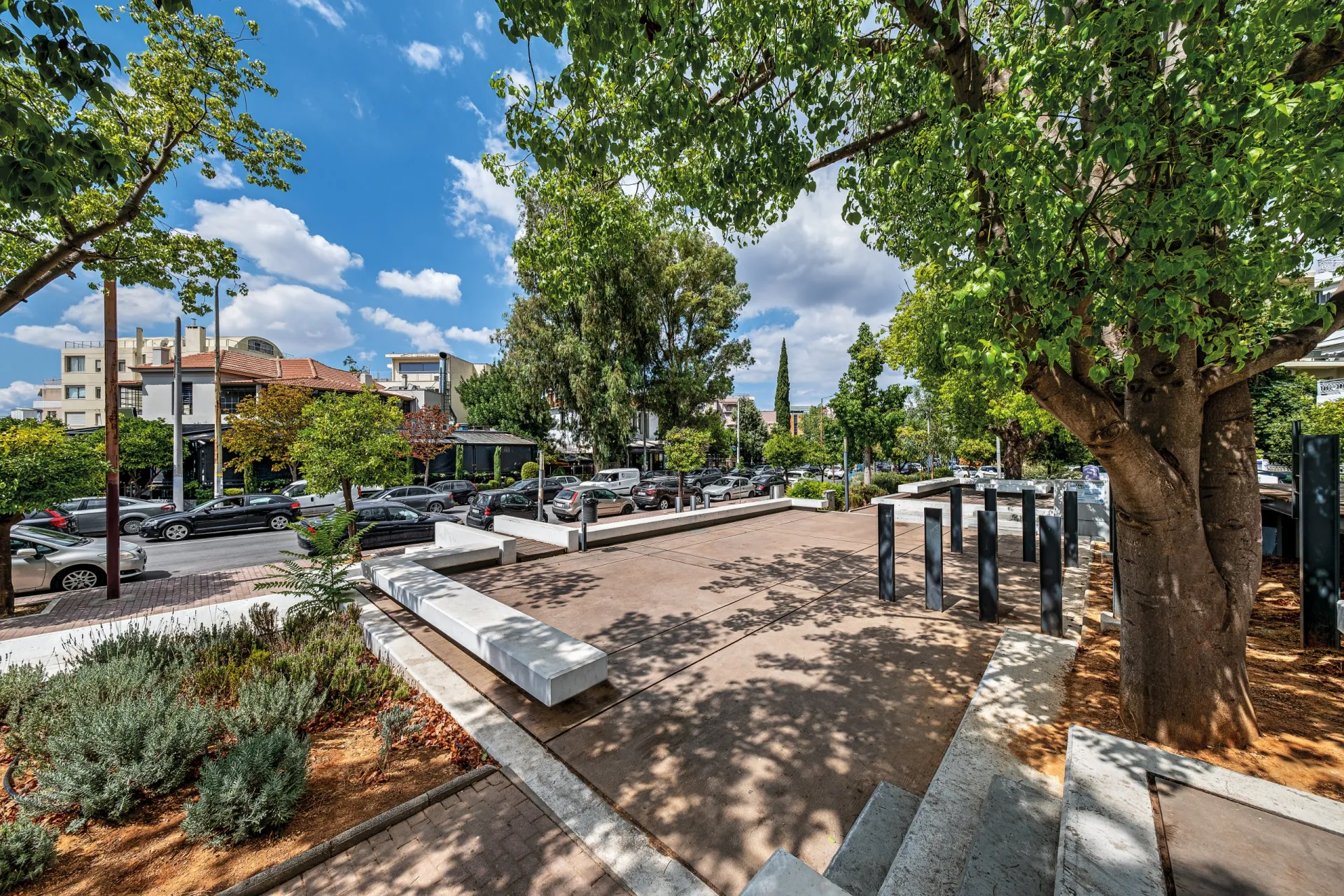
The Society also took on the collection of the “frontage charges” from the residents along the streets, for laying out and asphalting them. Examples include Paikopoulou (now Seferi), Vas. Pavlou (now Dimokratias), G. Isaia (now Al. Papanastasiou), Souri (now G. Papaspyrou) and I. Papageorgiou (now Tertseti) Streets. Notably, by 1958 500,000 drachmas had been spent “on the asphalting” of 4 kilometres of streets.
At the same time, great support was given in every way to the needy of our suburb. None of these efforts would have succeeded without the unique emotional bond and unity among the pioneering members of the time, which showed both in their efforts to improve the quality of life and in all kinds of recreational activities. The genuine and real cooperation of the MEO with the Community, and later the Municipality, should also be stressed.
Notably, the meetings of the Community Council, and later of the Municipal Council, were held in the Society’s building.
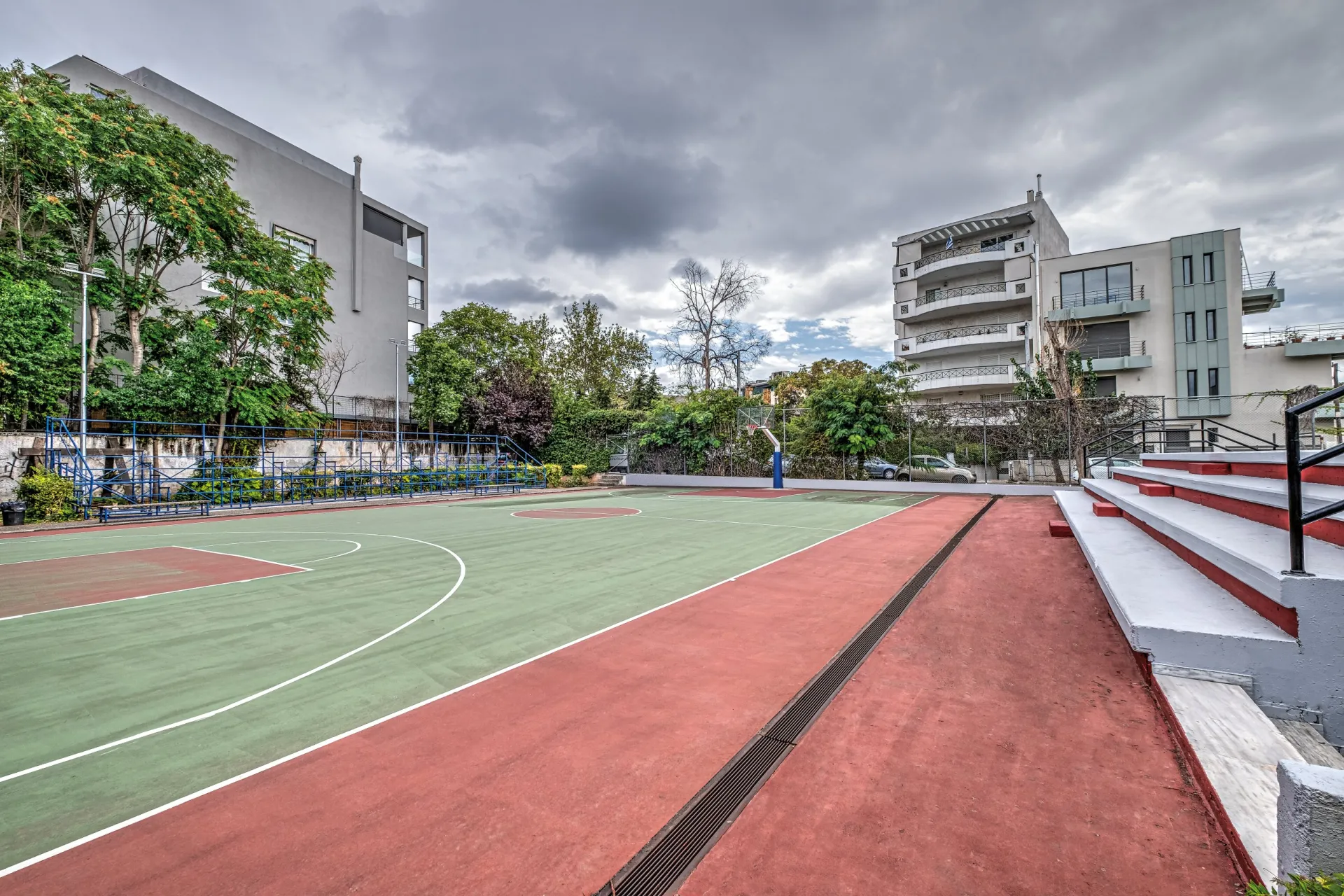
The main figures in the work of this period, apart from the successive Presidents of the Community, included: A. Angelakis, El. Deligiannis (Director of Athens College), E. Theodosopoulos, S. Katsoufris, G. Koutas (Police Director), Th. Stathoulopoulos (Director at the Ministry of Finance), K. Stavropoulos (Director of Tax Offices), V. Trichas, Til. Garios, B. Zaloni, G. Lamprakis, S. Maravegias, K. Spiliopoulos, I. Trampoulis, etc.
Besides these, other bodies also played a major role in the life of the suburb, such as:
- the sports clubs Psychiko Football Club (POPs) and “Poseidon”, which made a key contribution to developing the sporting ideal, mainly among young people,
- the Scouts of Greece, with their well-known contribution to children’s physical and mental development, led from 1945 and for many years by Ant. Giovanidis and Ath. Stamatopoulos, whose headquarters on Agiou Georgiou and Papanastasiou Streets were built thanks to a donation from the industrialist and benefactor Georgios Isaias,
- as well as other building cooperatives, such as those of the Tax Office Employees (who built part of the Agios Georgios parish known as “Eforiaka”), the War Veterans, and the Professionals and Craftsmen of Psychiko, the Union of Settlers of Agia Varvara, etc.
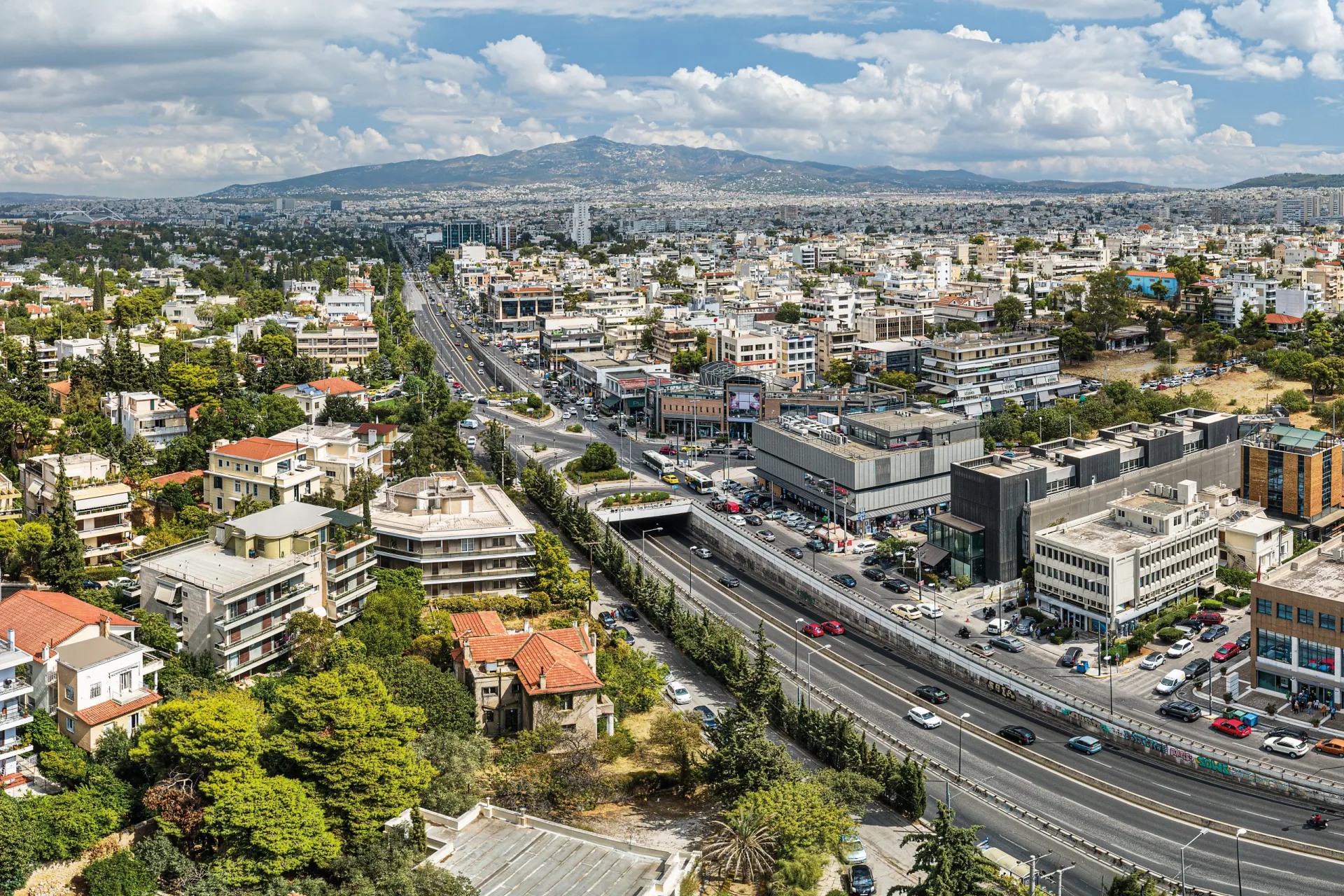
Over the years the suburb grew; in 1946 it was recognised as a community, and in August 1982 it became a municipality.
Within this framework, the later leaderships of the Community and the Municipality continued the work of building and improving the town’s infrastructure, so that Neo Psychiko was transformed from a vast stretch of open ground into a suburb that attracts the people of Athens, and from an outcast district of the Athens basin into a model town for the whole of Europe, giving its residents the chance to enjoy an enviable quality of life.