

Filothei
History of Filothei
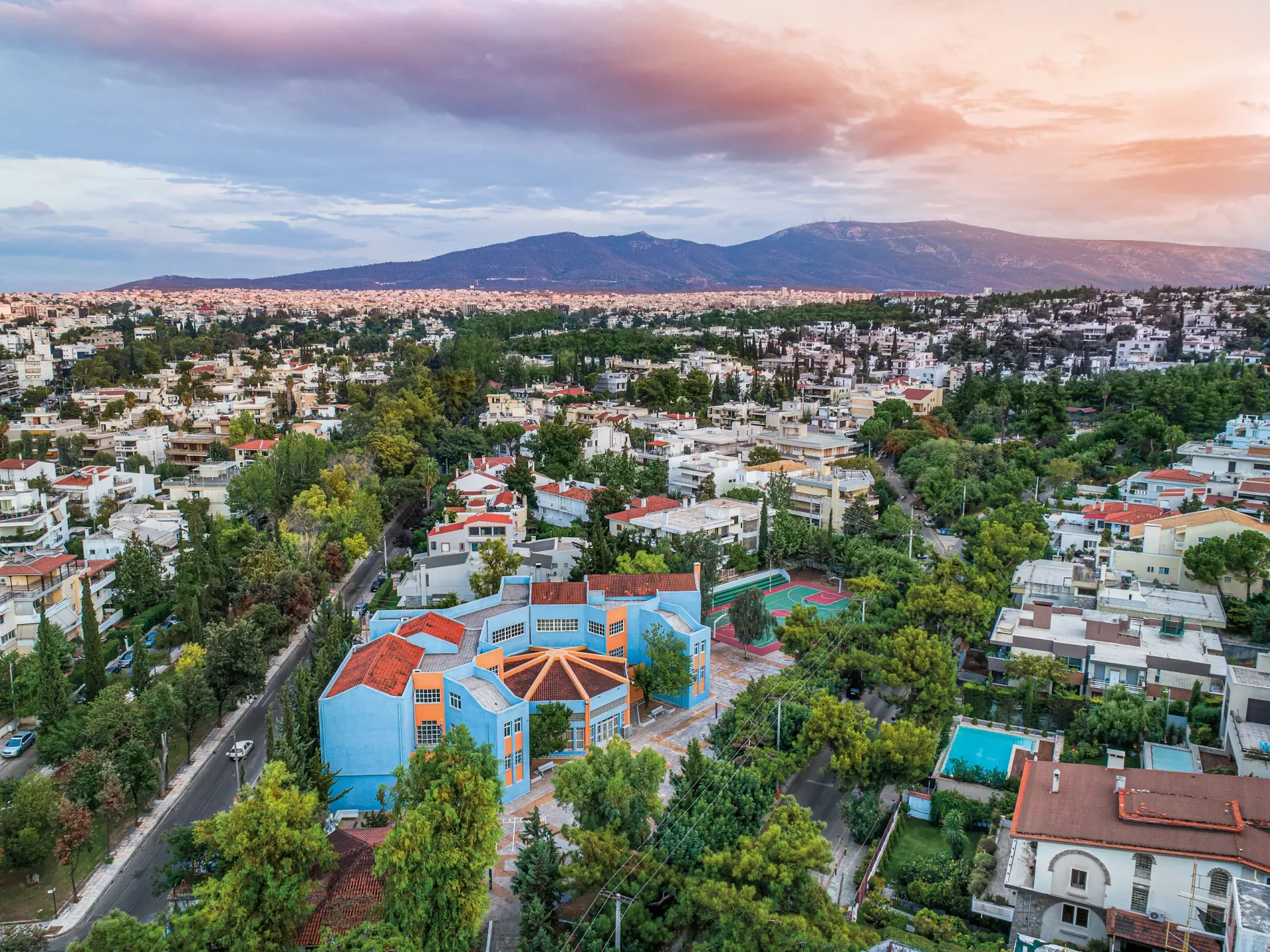
From the 1920s, the management of the National Bank of Greece was looking for a suitable area on which to build a settlement for its employees.
A rocky, barren stretch of land 8 kilometres north of the heart of Athens
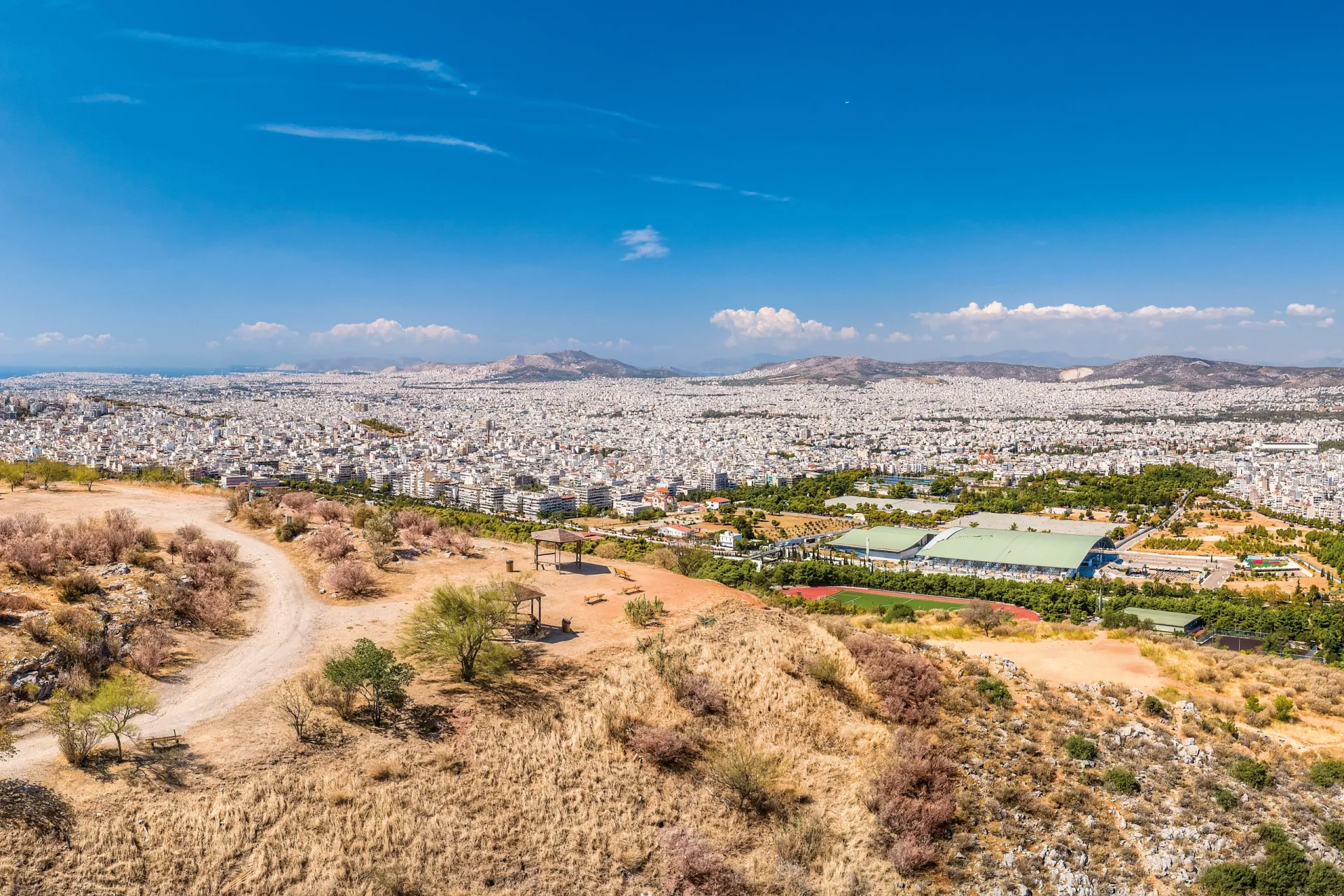
At that time the area was called Nea Alexandreia. It was what remained of a larger area that had been bought at the beginning of the century by Greeks from Egypt to create a settlement of that name. In 1907 a street plan was approved covering the whole area of the planned new settlement, from Kifisias Avenue to the end of today’s Vyzantiou Avenue in the Municipality of Nea Ionia. This plan, ambitious for its time, went no further than the sale of a few plots, and so the Greeks from Egypt transferred the land to third parties.
After parts of this land were compulsorily expropriated by the Greek State in 1924–1926 to house the refugees of 1922, covering the whole area within the administrative boundaries of the municipality of Nea Ionia, the remaining part was bounded by the College, Kifisias Avenue, the railway line on Kapodistriou Street, the “Kamares”, that is, the Hadrianic Aqueduct, and the ridge of the Tourkovounia, and covered about 2,000 stremmata.
The area was inhabited by a few shepherds and quite a lot of wild animals (such as wolves, jackals and foxes). The vegetation was limited to a few shrubs and almond trees. Water, however, was plentiful.
The idea and its realisation are owed to the governors of the National Bank of Greece, Ioannis Drosopoulos and Alexandros Koryzis, and to the governor of the National Mortgage Bank, Georgios Iatrou.
With the cooperation of the “Building Cooperative of National Bank Employees in Filothei”, founded in January 1929, the area was bought under a contract signed a few months later, and after much effort they managed to house the bank’s employees. A supplementary contract stated that the land transferred also included the area that is today laid out as a square at the junction of Kapodistriou Street and Kymis Avenue. It should be noted that the whole effort was made at no financial cost to the State.
The first street layout of the suburb, with its dirt roads
The design and building of the settlement were entrusted to distinguished scientists, town planners, architects, engineers, etc.
Notable among them were the architects Ar. Zachos and Kim. Laskaris, the Polytechnic professors Dim. Pikionis and Paraskevopoulos, the sculptor Tompros, the academician Dimitris Kampouroglou and Zach. Papantoniou, who submitted their written opinions on the style of the settlement’s houses.
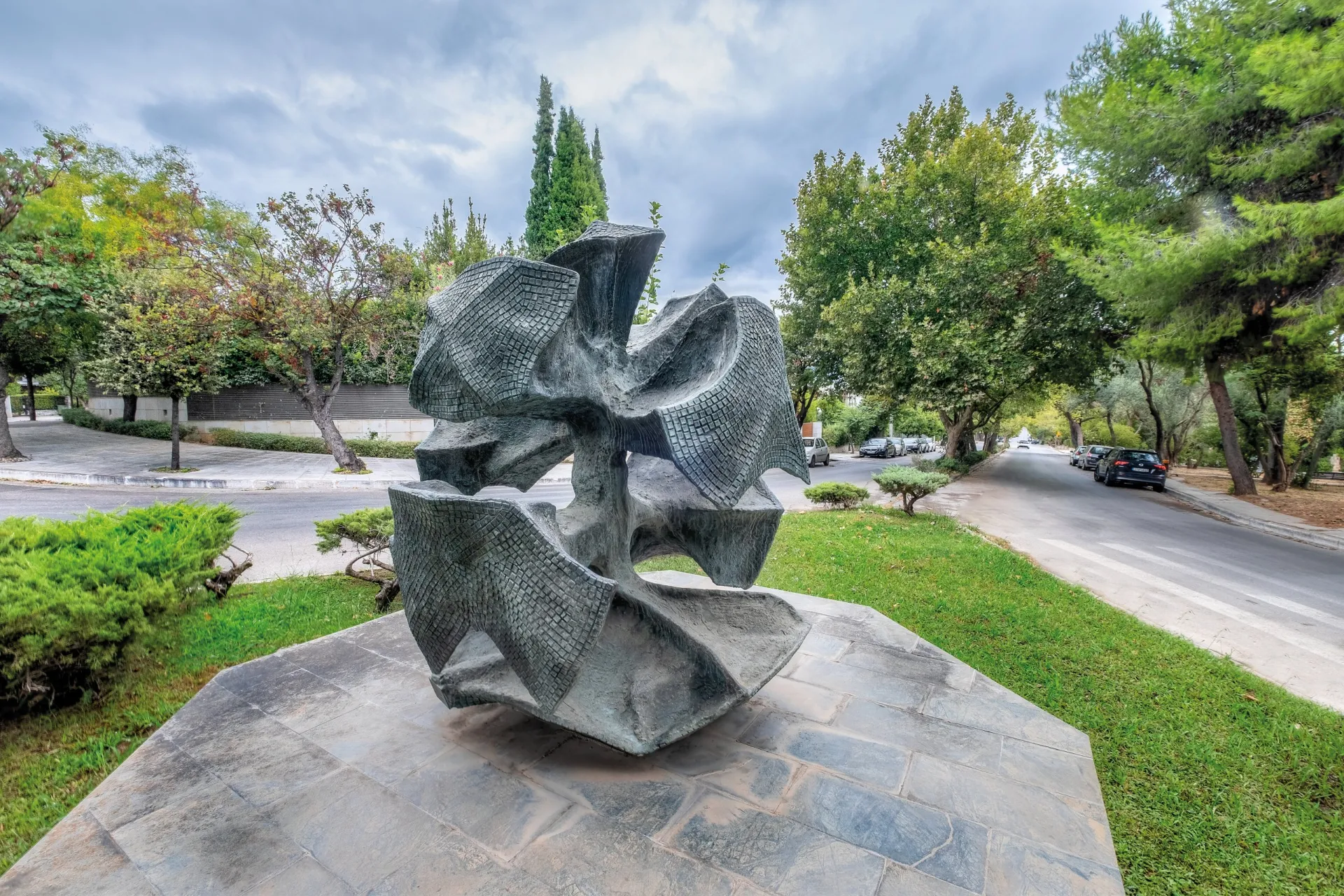
The result was a garden city based on English models, with two thirds of its total area given over to public spaces such as parks, squares, playgrounds, schools and others. From the outset, its creators aimed to build a settlement that was sound by the planning, housing and environmental standards of the time, with prospects of a positive, steady upward development.
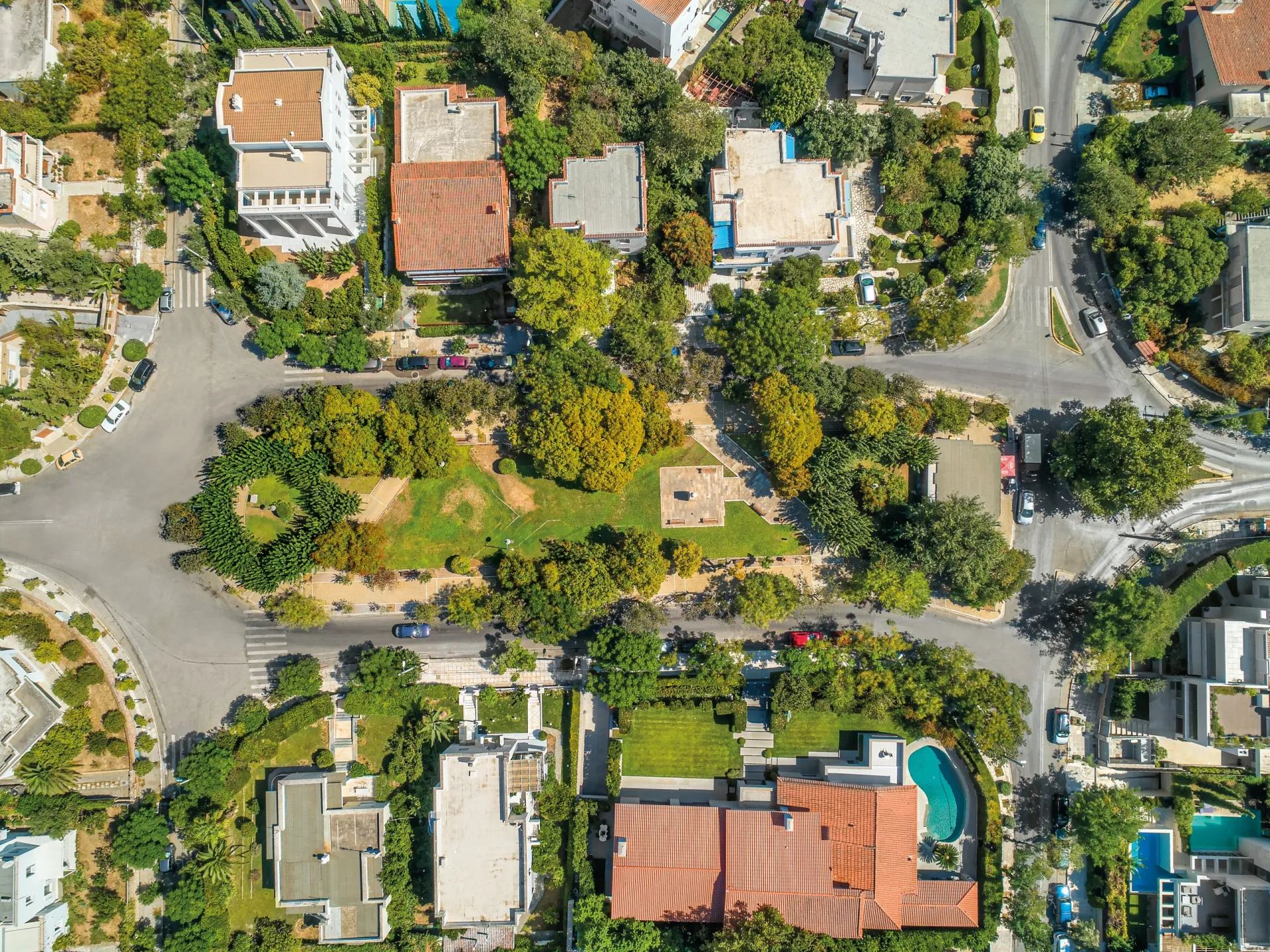
The plan provided for two small markets with a few shops, intended solely to meet the residents’ basic needs. All other kinds of business premises were prohibited by a pioneering clause in the decree approving the street plan, to protect the environment on the one hand and the residents’ peace and quiet on the other.
In 1932–1933, once the infrastructure works (electricity, water supply, road network, etc.) had been completed, the first houses began to be built. They were planned with such an orientation that they would always get sunlight: on two neighbouring plots, one house would be built at the front of its plot and the one next to it at the back of the other.
The first residents planting Filothei’s first trees
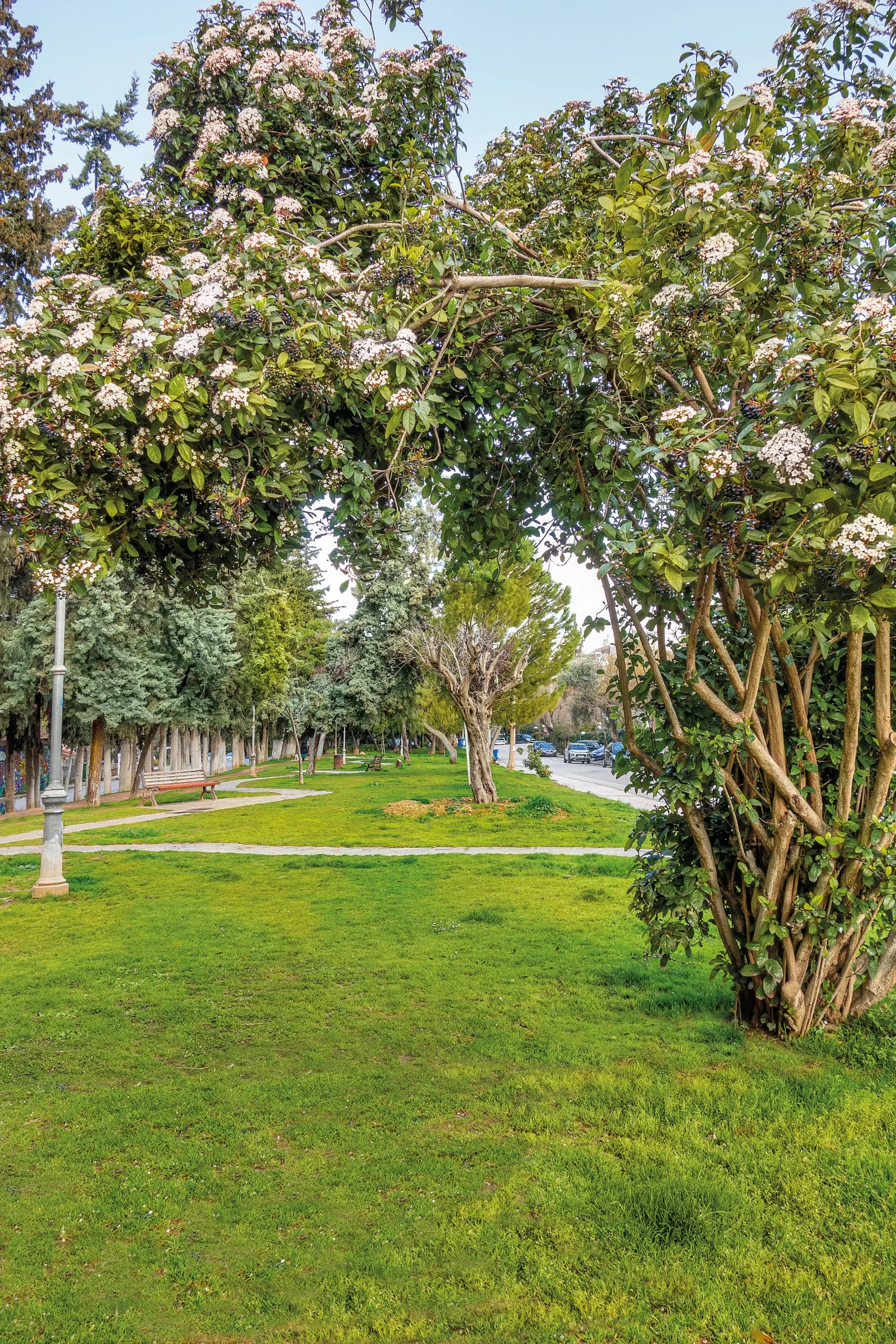
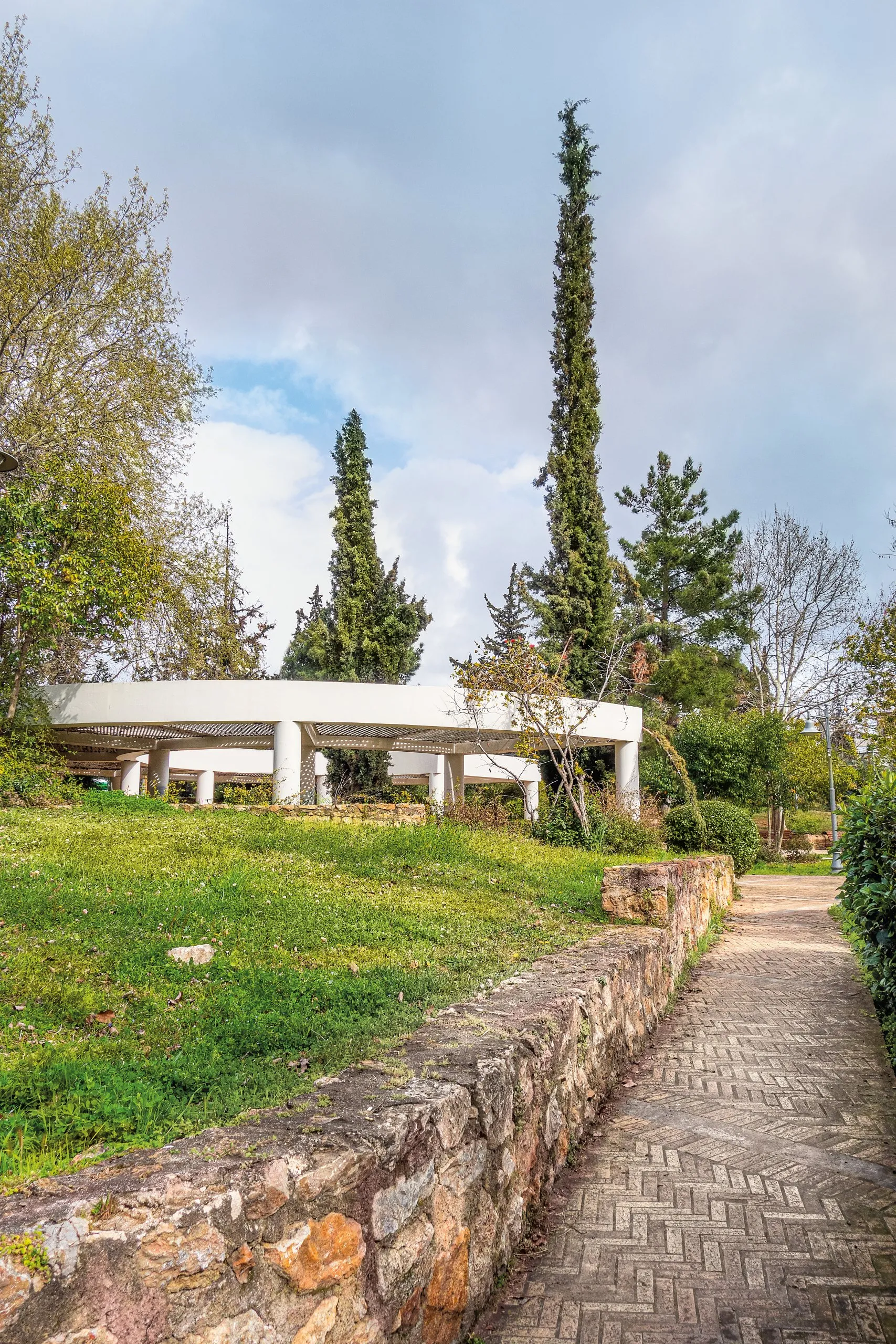
Greenery was one of the Cooperative’s first concerns. Within the first two years, 28,000 trees were planted and parks, squares, the church, the gymnasium and the rotunda were built. The planting of trees and shrubs continued intensively and at an increasing rate, resulting in the Filothei we see today.
When the streets of Filothei were being opened, various archaeological objects were found. Archaeologists dated them to 300 BC. On the border between Filothei and Nea Ionia, the remarkable Hadrianic Aqueduct was discovered, ruins of which still exist today. The ruins of a Roman villa and many other finds were also discovered on Georgiou Stavrou hill.
The first people who settled in Filothei came administratively under the then Community of Chalandri. The settlement became a community in 1934 under the name Community of Nea Alexandreia, with the late Konstantinos Malamatianos as its first president.
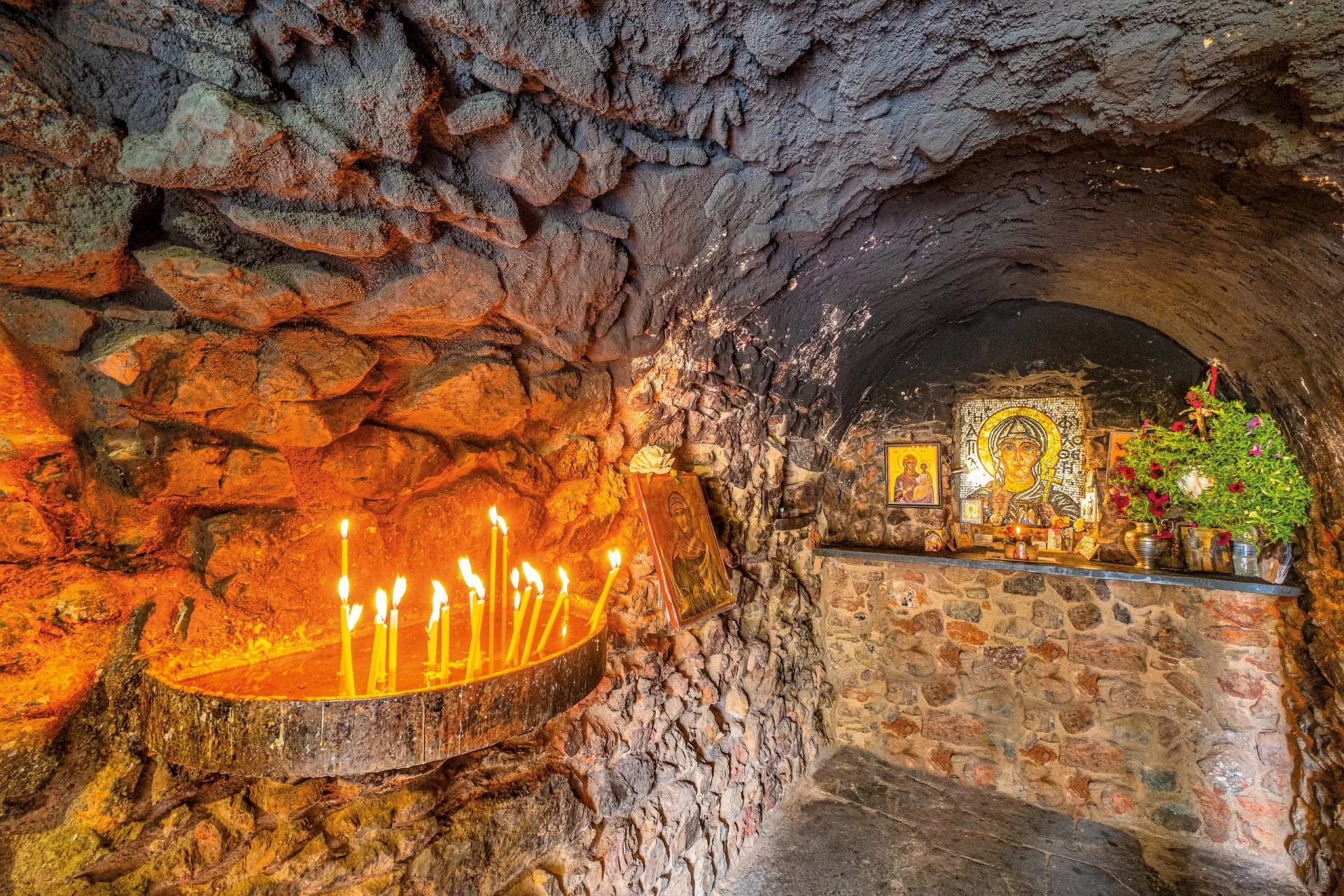
On 16 May 1936 the name of the area was changed to Community of Filothei. This was done in honour of Saint Philothei, whose crypt was discovered in 1934 while red stone was being quarried for building the area’s houses. The martyr’s name was preferred to “Pyrsos”, which Kampouroglou had proposed after the original name of the stream.
Little by little, Filothei began to take shape. The residents, who already knew each other from work, got on very well and took part in community life with warmth and enthusiasm.
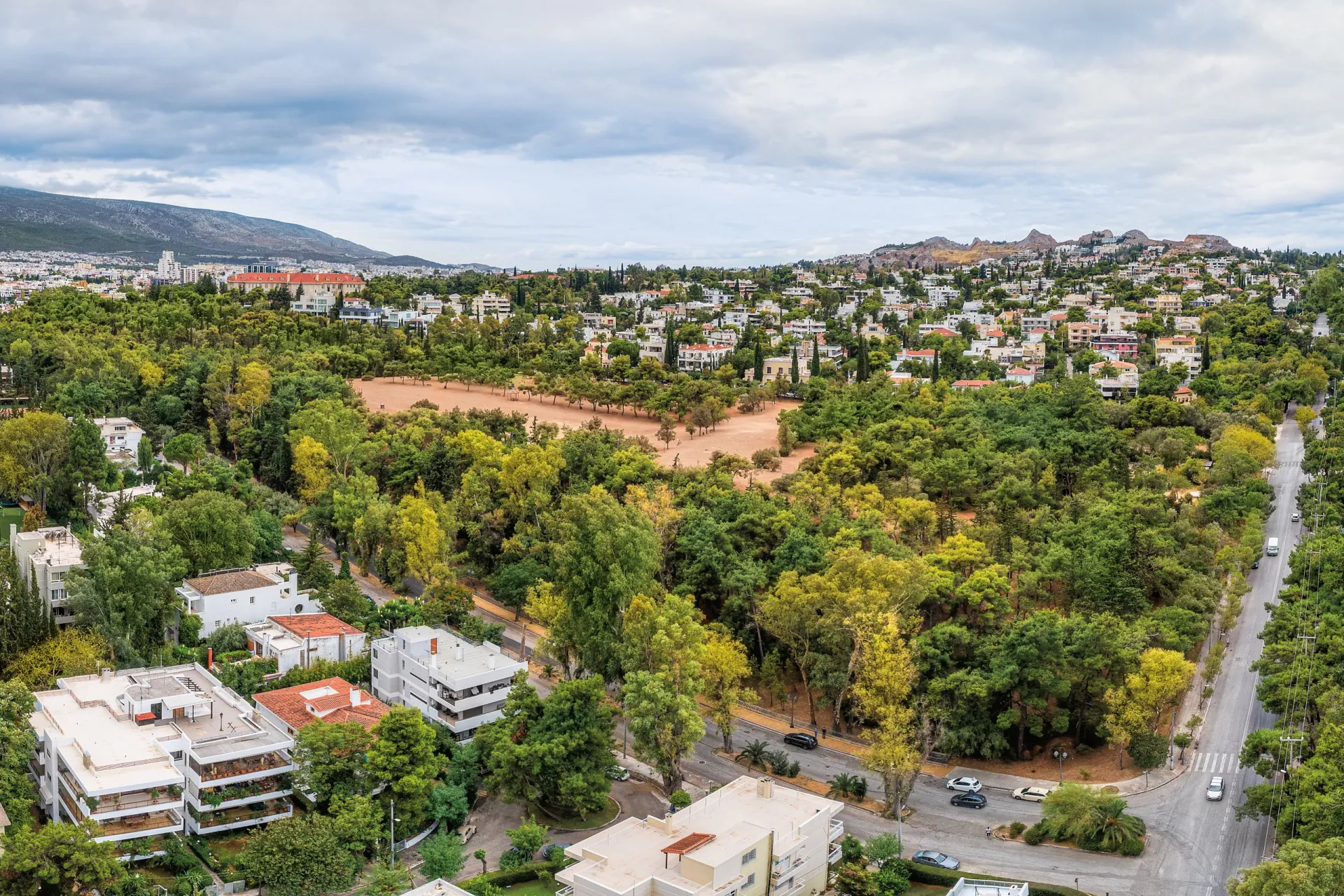
In 1936–1937 the first Primary School of Filothei opened. The children of the area enrolled there; until then they had been taught in a shack on the site of today’s Filothei cinema. At almost the same time the branch of the French Academy opened. There was no secondary school in the area, so children went to Chalandri. The area was dominated by the College, which had been built in 1928.
Little by little, various small shops began to operate in the old market area, and at the same time the innovative motorised bakery of Ioannis Kalyvopoulos appeared.
For transport, the area was served by the yellow petrol buses of Power, with a high fare of 7 drachmas for 9 kilometres; by the state buses, with a fare of 5 drachmas, known as “talira” (five-drachma coins); and finally by the small train that ran from Athens (Lavriou Square) to Lavrio.
Filothei got its first 100 houses and began to take on the form of a garden city.
Life had settled into its normal rhythm; there were now more than 100 houses, and building continued until 1940, when it stopped with the outbreak of war.
During the Occupation
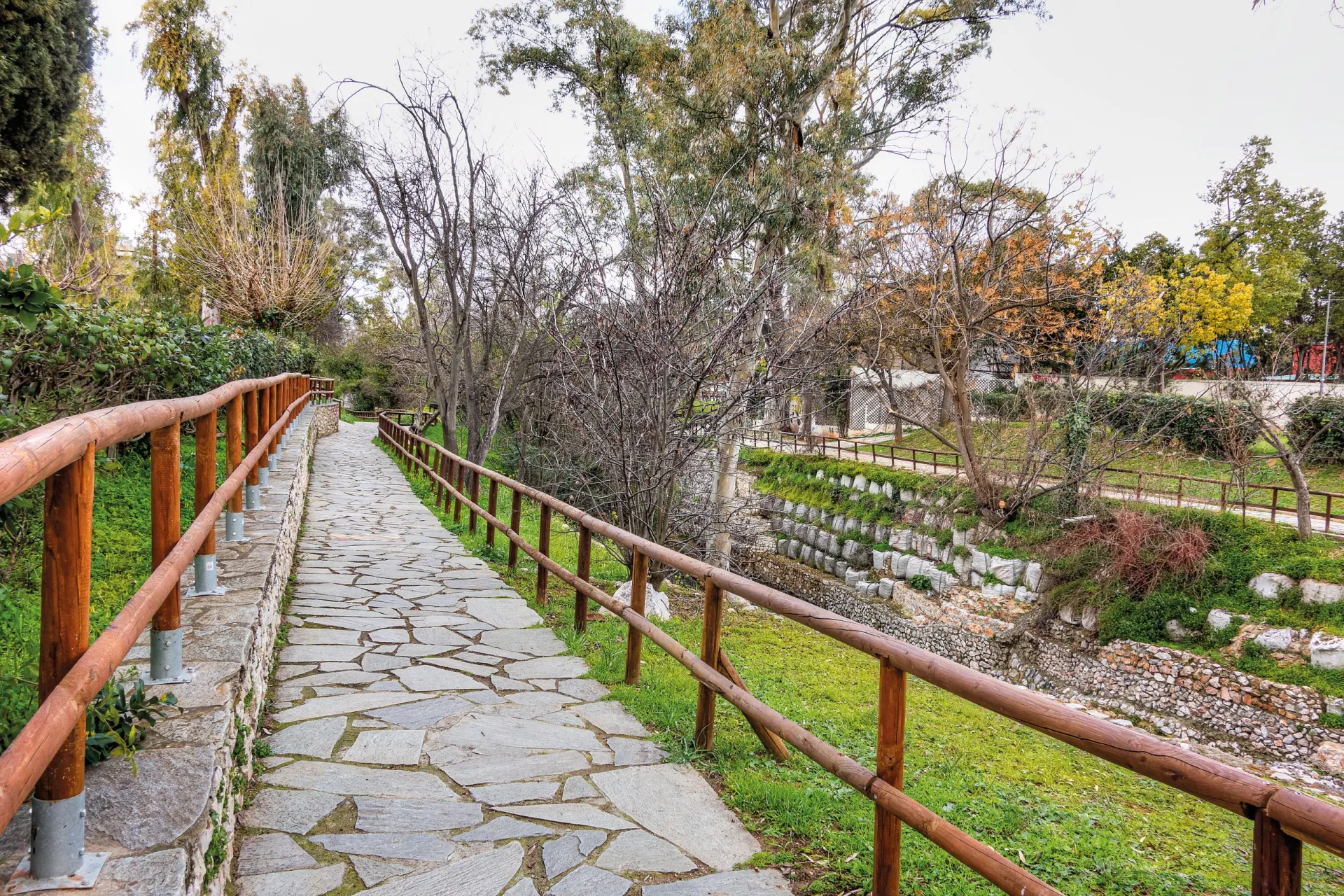
During the Occupation, the residents of Filothei turned their gardens into vegetable plots and orchards and also kept chickens in coops, which helped them cope with the famine of the Occupation. The school stopped operating, but the children continued their lessons at the home of their teacher, Mrs Isigoni.
The employees kept going to the Bank on the legendary buses “Sousou” and “Marmaro”, which were converted to gazogene, that is, they ran on producer gas, because of the shortage of petrol. The buses had been given these names by the very cheerful residents of Filothei: the first was named after its constant rocking and the second after its constant breakdowns, which often meant that the passengers had to push. The buses ran four times a day, twice to Athens and twice to Filothei, and the residents of the settlement, who were mainly bank employees, all set off together in the morning and came back in the evening.
It is worth noting that, along with the other evils the war brought, it also brought inflation, which wiped out the value of money. For example, one egg cost 20,000,000 drachmas. At the same time, however, the debts to the Bank of everyone who had taken out loans to buy a plot or build a house were also wiped out.
After the war
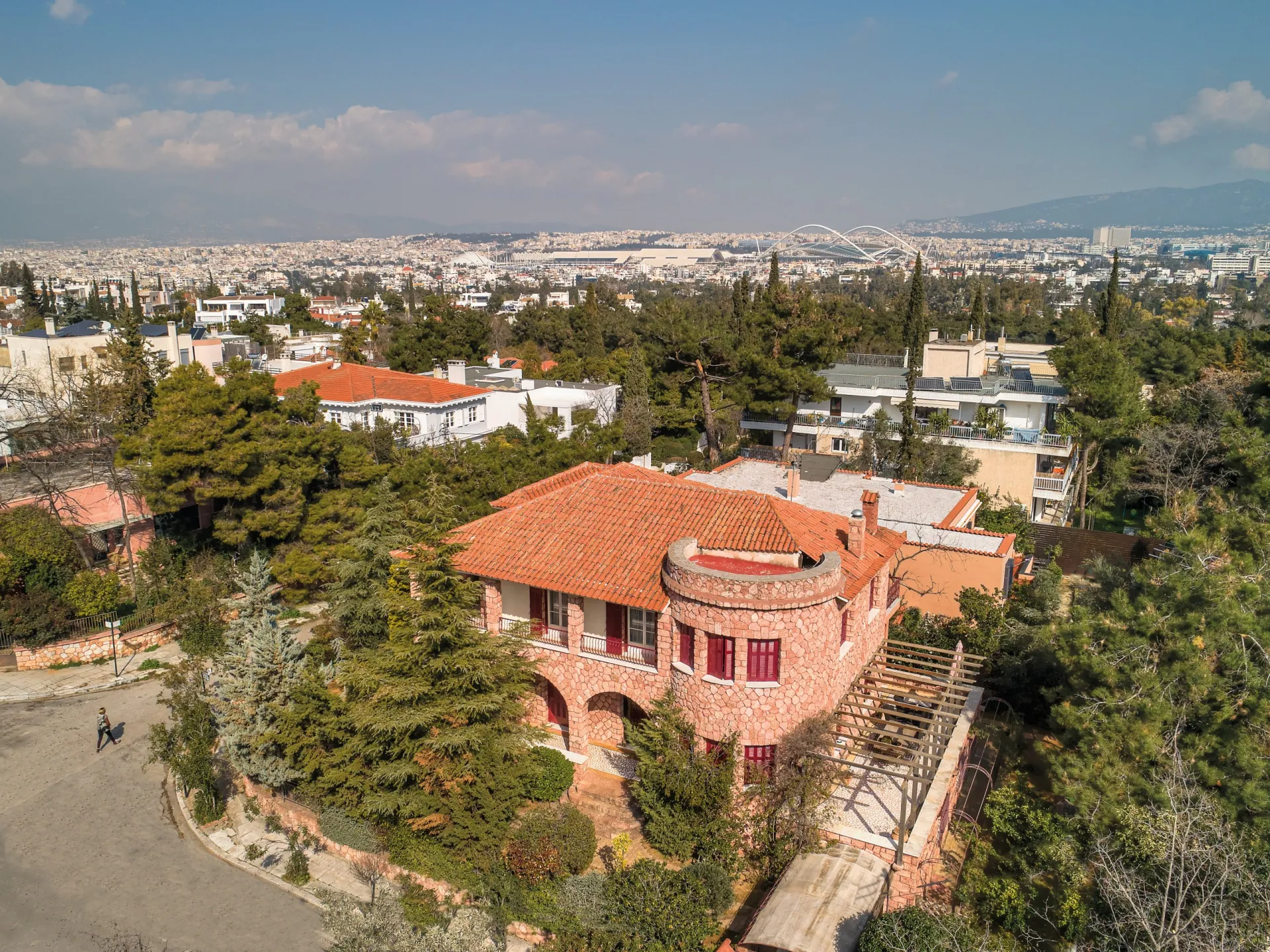
When the war ended, things began to return to their normal rhythm. More and more houses began to spring up and the suburb began to take the form of an organised town. The schools, the few shops, the Police, the Filothei cinema and the Town Hall gradually began to operate. Even so, Filothei remained a quiet neighbourhood, which many called a “dormitory town”, because few families decided to make use of their plots in lower Filothei, where the town plan then extended, and to move to the newly created settlement.
The atmosphere changed a little in 1950, after the Building Cooperative sold to journalists (ESIEA, the Journalists’ Union of Athens Daily Newspapers) the area from Georgiou Stavrou Street to Eleftheriou Venizelou Street, which amounted to 52 plots to house 100 members of the Union. This clever idea of the Cooperative aimed to advertise Filothei through the journalists’ publications, so that the suburb and its advantages would become known and attract settlers. From the beginning of the 1950s, Athenians became interested in Filothei; plots were bought and sold and many houses were built, always to meet the needs of the settlers, with single-storey or at most two-storey buildings and not apartment blocks.
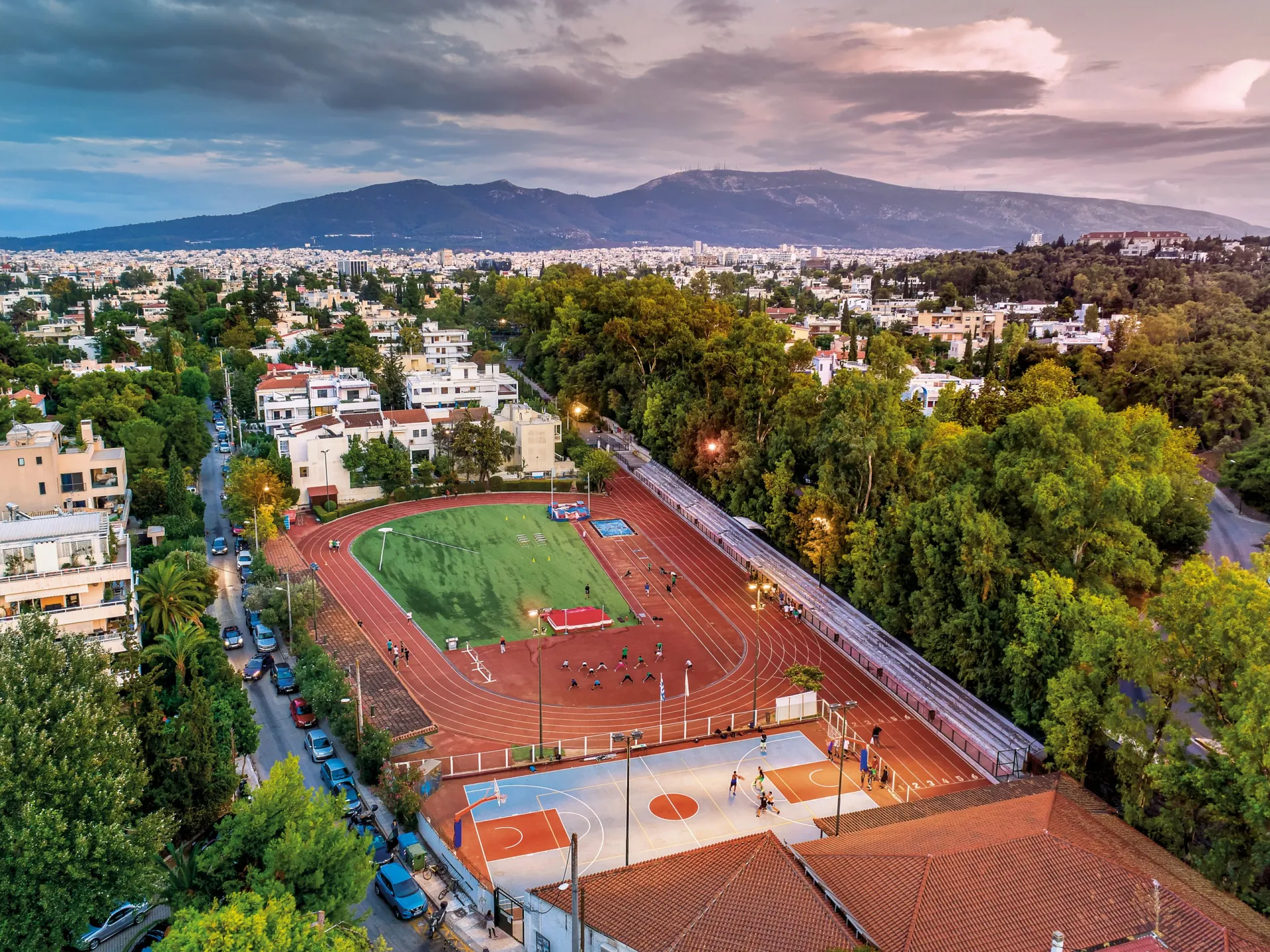
At the same time, the athletics track was built by the late Stelios Kyriakidis, as well as the Filothei Tennis Club. The journalists’ contribution to creating the settlement was even greater if you also count their help in solving many problems, such as transport, food markets, places of entertainment, the forced sale of the Building Cooperative’s plots to other cooperatives, etc.
Filothei now became known for its quiet and for its abundant greenery, which its residents had planted inch by inch under the supervision of Michail Poulakis. Restricting business premises to strictly predefined areas of the settlement and the abundant greenery were the factors that made Filothei attractive to many people.
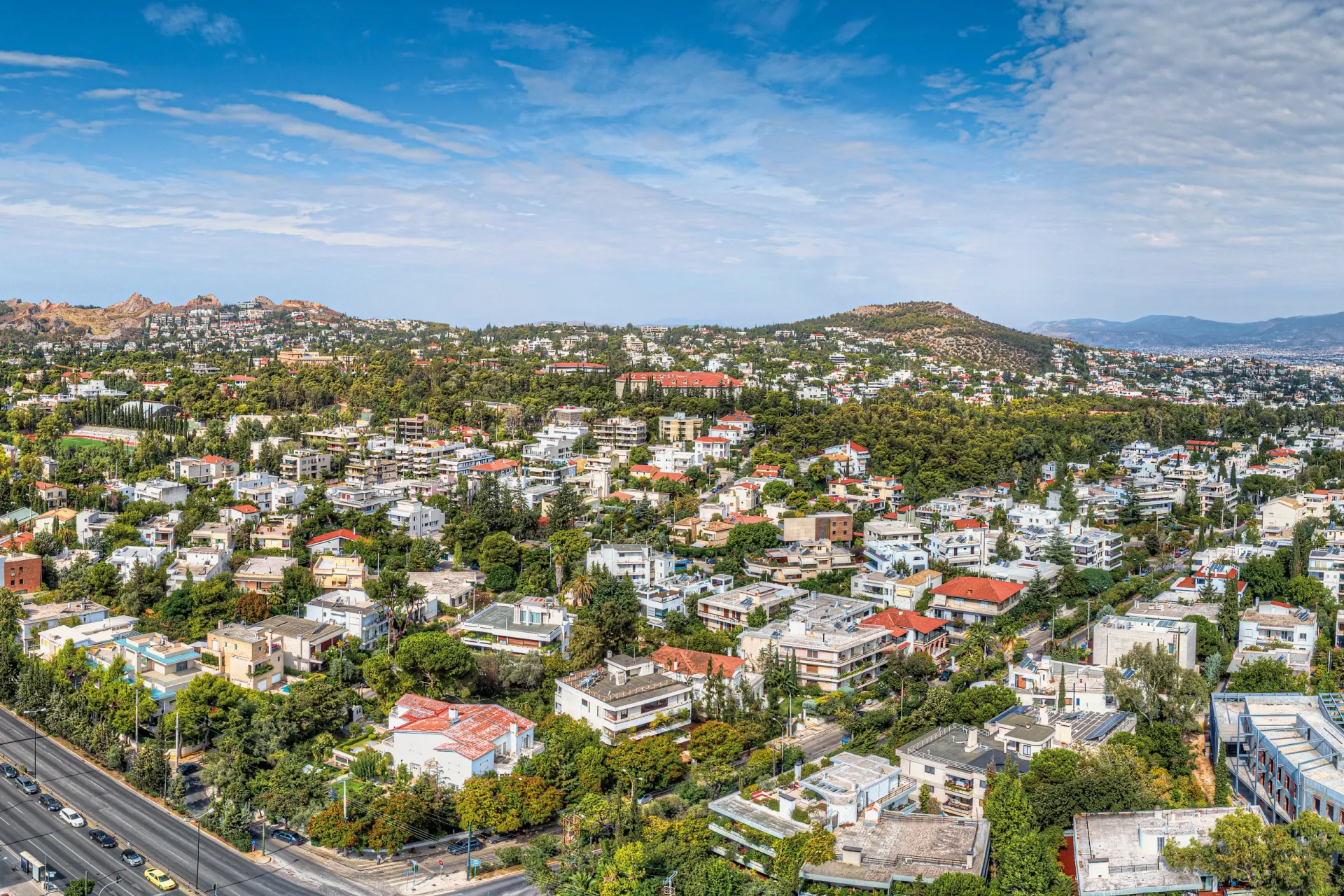
With the rapid growth of the settlement following the road works, the sewerage network in upper Filothei, street lighting, water supply, tree planting, etc., which began in 1955, the Building Cooperative decided to develop the rest of the land it had bought as well, that is, the area from the Church of Agia Filothei up to the mountain, which was called “the rocky area”. For this purpose it drew up a street plan, which was finally approved by the State in 1968 after fifteen years of effort by the Cooperative. From then on, building began in this area too, so that today there are very few unbuilt plots within the administrative boundaries of the municipality of Filothei.
In 1971 the Building Cooperative was put into liquidation, a process that is still going on today. During its operation, apart from the land it ceded for public-benefit buildings and for sports grounds and facilities, it also financed all the works carried out in the new settlement and worked so closely with the Community that it is rightly described as a “strong and valuable supporter” in the creation of Filothei. The few plots the Cooperative still owned in Filothei after 1971 were used for school and public-benefit buildings, such as the secondary school on G. Stavrou Street.
Filothei became a municipality on 1/1/1991, as the demand for plots, and therefore the number of residents, kept growing steadily.